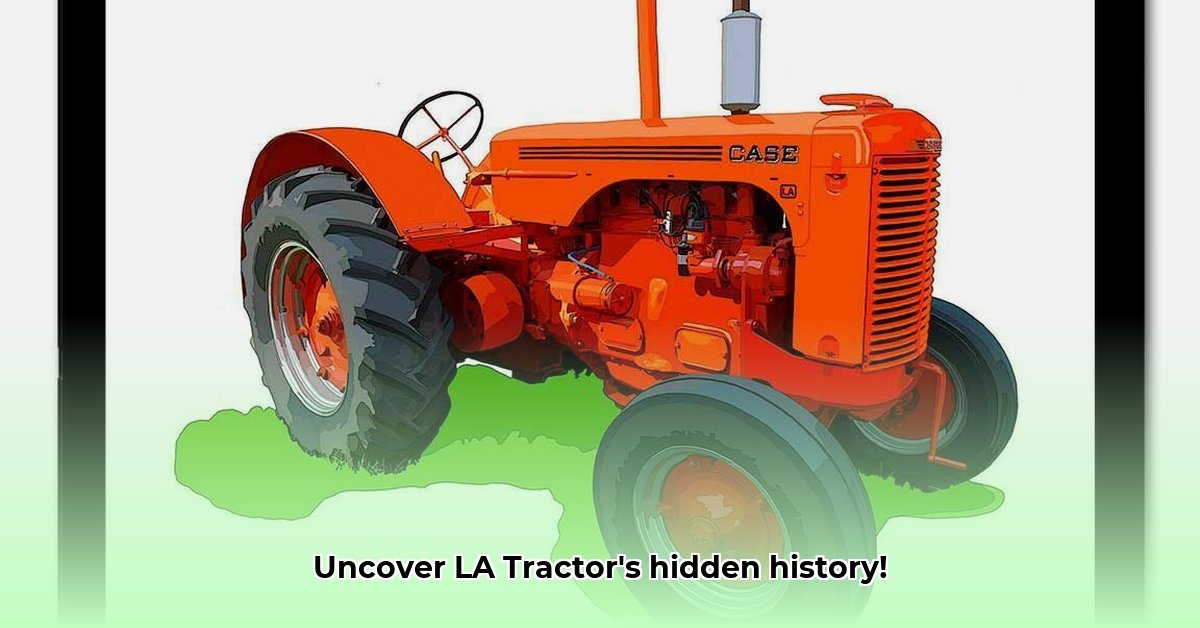
The Case LA tractor—a name synonymous with hardworking farmers and simpler times—holds a significant place in agricultural history. Manufactured between 1940 and 1953, this robust machine became a staple on farms across the nation. This comprehensive guide explores its history, technical specifications, maintenance, and lasting legacy, appealing to both seasoned tractor enthusiasts and those newly captivated by this iconic piece of agricultural machinery. For more on Case tractors, check out this useful resource.
Technical Specifications and Design: A Workhorse Unveiled
The Case LA was built for endurance. Its powerful 6.6-liter engine (a substantial size for its era) offered farmers flexibility, running on gasoline, specialized tractor fuel, or even LPG (liquefied petroleum gas). Power reached the wheels via a four-speed, unsynchronized transmission—a testament to its straightforward, robust design. Weighing in at a hefty 7515 pounds, this tractor's substantial weight ensured stability during operation.
While lacking modern conveniences like power steering, the open operator station provided excellent visibility. The tractor's drawbar and belt horsepower were reliable, consistent with manufacturer claims. This provided farmers with the consistent power they needed for various tasks.
| Specification | Value | Notes |
|---|---|---|
| Engine Size | 6.6 Liters | A sizable engine for the time. |
| Fuel Options | Gasoline, Tractor Fuel, LPG | Offered farmers considerable flexibility. |
| Transmission | 4-speed Unsynchronized | Required operator skill and experience. |
| Weight | 7515 lbs | Provided substantial stability. |
| Production Run | 1940-1953 | A considerable 13-year production run. |
| Total Units Produced | Approximately 35,493 | A substantial number of tractors produced. |
Wasn't the simplicity of the Case LA's design a key factor in its popularity among farmers? How did this simplicity influence its maintenance and repair needs compared to more complex, later models?
Historical Context: A Mid-Century Farming Icon
The Case LA emerged during a pivotal era of agricultural transformation. The 1940s and 50s saw a surge in demand for more efficient farming equipment. The Case LA, with its simple yet dependable design, effectively met this demand. While lacking advanced features found in later models (such as power steering or a protective cab), its straightforward design contributed to its popularity and ease of maintenance. Its relatively straightforward design and readily-available parts made it accessible for the average farmer to maintain and repair.
The resourcefulness of farmers further contributed to the Case LA's longevity. Many creatively adapted and upgraded their tractors over the years, often replacing the original engine with a more powerful Detroit Diesel. This demonstrates both the tractor's adaptability and the ingenuity of its owners. However, even for its time, its horsepower was relatively low, making it better suited for smaller farms than larger operations.
Maintenance and Restoration: A Rewarding Endeavor
Maintaining and restoring a Case LA can be both challenging and incredibly rewarding. The tractor’s straightforward design simplifies some aspects of maintenance, but its age can create parts sourcing challenges. Fortunately, robust online communities dedicated to classic tractors offer invaluable support. Connecting with fellow enthusiasts provides access to a wealth of knowledge, technical advice, parts trading opportunities, and helpful community-sourced documentation.
Restoration Steps: A Step-by-Step Guide
- Assessment: Begin with a careful, thorough inspection, noting all areas requiring repair or restoration (photography is invaluable here).
- Parts Sourcing: This often proves the most time-consuming step. Explore online retailers, specialized suppliers, classic tractor parts dealers, and salvage yards.
- Engine Overhaul (If Necessary): This is a demanding task requiring mechanical experience. For those lacking skills, engage a qualified mechanic specializing in vintage tractors.
- Mechanical Systems Restoration: Address the transmission, hydraulics, and other mechanical components, consulting repair manuals and online resources.
- Cosmetic Restoration: Restore the tractor's appearance through cleaning, painting, and the application of original-style decals.
Legacy and Significance: An Enduring Symbol
Despite its relatively simple technology by today's standards, the Case LA remains a powerful symbol of agricultural history. Its durable design, adaptability, and straightforward approach significantly contributed to its long production run and enduring popularity. It's more than just a machine; it represents a tangible connection to the past. Its enduring legacy is showcased by collectors who meticulously preserve these machines, safeguarding a piece of agricultural heritage. The Case LA also serves as a valuable educational tool, offering insights into design principles and the evolution of agricultural technology. It’s a true testament to human ingenuity and innovation.
Improving Fuel Efficiency: Practical Tips for Your Case LA
While the Case LA wasn't known for fuel efficiency, mindful operation and maintenance can significantly impact fuel consumption. What strategies can significantly extend the lifespan of your Case LA and maintain its operational functionality?
Key Strategies for Enhanced Fuel Economy:
- Gear Selection: Use the appropriate gear for the task. Avoid lugging the engine in too low a gear or over-revving it in too high a gear.
- Throttle Control: Avoid sudden acceleration and maintain a consistent speed whenever possible.
- Regular Maintenance: Ensure regular oil changes, filter cleaning, and other preventative maintenance tasks; this keeps the engine running optimally.
- Engine Modifications (Proceed with Caution): While engine modifications are possible, they're complex, potentially risky, and may not always result in notable fuel savings. Carefully weigh the costs and benefits.
- Matching Tractor to Task: Avoid using the Case LA for tasks that require substantially less power. A smaller tractor may be far more efficient for lighter jobs.
Remember, even though the Case LA may not reach modern fuel efficiency standards, responsible operation and maintenance can make a real difference while respecting this historic machine's heritage.